Survive 7 Days In Desert Build Your Desert Camp
Turn palm wood into tents, fire, and a weekly stronghold between oasis runs.
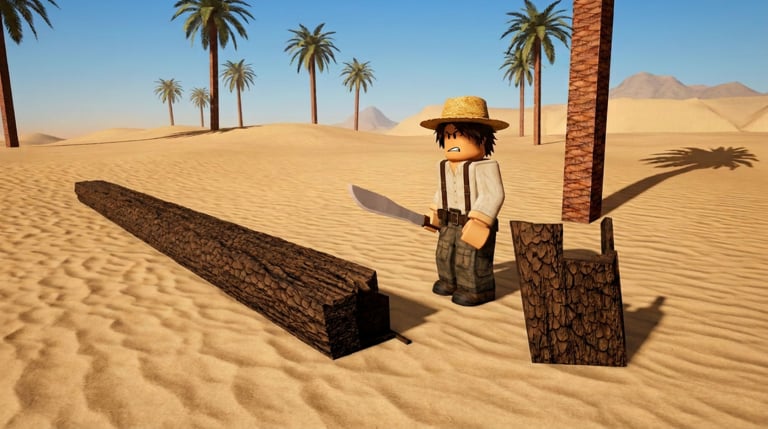
Building a camp is the moment Survive 7 Days In Desert stops feeling like a sightseeing tour and starts feeling like a survival week. The official loop puts camp construction right after chopping palm trees and before the long fight against heat and thirst. Screenshots and live presentation show tents and campfire as the emotional center of a livable desert foothold—exactly what you need if you plan to still be standing when the Day 7 camel arrives.
This guide covers site selection, wood priorities from palms, a practical tent-and-fire core, expansion rules that do not bankrupt your week, and how camp design supports water and heat systems. It is written for Christos Studios’ Roblox survival place as a released but still evolving experience, so the advice favors layouts and habits that remain useful even when details shift.
What a good camp must do
A camp is not a sculpture garden. It must:
- Give you a recovery point when heat climbs (Survive Heat).
- Sit close enough to palms and oasis water that loops stay short (Purify Water).
- Store the progress of a multi-day plan (Day-by-Day Walkthrough).
- Offer teammates a rally marker on servers with up to 25 players.
- Stay maintainable so Day 6–7 is conservation, not frantic rebuilding before the camel rescue.
If a design choice fails those jobs, postpone it.
Choose the site before the blueprint
Walk potential sites with three distances in mind: palms, water, and exposure. Ideal early camps form a triangle you can run without getting lost among rocky mountains and cactus fields. Landmark visibility matters—if you cannot recognize home from a palm grove, you chose poorly.
Prefer: moderate ground near mixed resources, some natural shade potential, clear inbound paths. Avoid: isolated peaks that look cinematic, dead zones far from both wood and water, and spots that force every trip through contested choke points if the server is full.
Beginners coming from Getting Started should place a functional core first, then judge whether relocation is needed after one or two full resource cycles. Moving early is cheaper than stubbornly defending a bad address for seven days.
Palm wood is the camp economy
Chopping palm trees feeds construction and ongoing needs. Treat early wood as strategic capital:
- Fund tent and campfire essentials.
- Keep a maintenance buffer.
- Only then spend on comfort expansions.
Players who dump every log into decorative sprawl often face a mid-week shortage when repairs or replacements matter. On busy servers, harvest earlier and ferry materials home sooner so open piles do not vanish into someone else’s plan.
Raise the tent-and-campfire core
Your first build milestone is a living core: shelter plus fire. Tents signal home; the campfire signals warmth, gathering, and the classic desert-camp fantasy shown in the game’s presentation. Place them so you can enter recovery quickly without maze-like pathing. Keep the core compact. Compact camps are easier to defend socially (less wandering), easier to heat-manage, and easier to expand thoughtfully later.
Practical placement tips:
- Face primary entrances toward your most-used resource path.
- Leave clear space for hauling wood without tripping through unfinished clutter.
- Keep the fire close enough to feel central, not so close that traffic jams the tent access.
- Make the core obvious at a distance so coop teammates stop asking where home is.
Expand in layers, not sprawls
After the core works, expand in layers tied to real bottlenecks:
- Layer 1 — Survival: anything that shortens water/heat recovery.
- Layer 2 — Storage and staging: space to park materials between palm runs.
- Layer 3 — Comfort and coop: extra tent capacity or clearer role zones for groups.
- Layer 4 — Style: only when Days are stable and buffers exist.
This layered approach stops Day 2 vanity from stealing Day 5 stability. The desert week is a marathon; your camp should look slightly unfinished early and solid later—not the reverse.
Camp as a heat and water tool
Every wall and tent flap is also a heat valve. Returning to camp must be faster than toughing out a bad meter. If recovery requires a long final jog across open sand, redesign. Likewise, water runners should be able to leave and re-enter without navigating an obstacle course you built for screenshots.
Integrate chores into camp life: drop wood, check water status, purify on schedule, rest shade, then leave again. Camp that supports chore choreography will outperform a prettier base that breaks your rhythm.
Coop building without chaos
On multiplayer sessions, agree on a single core location. Split roles: cutters bring palm wood, builders place the next approved piece, runners keep purified water flowing. Too many simultaneous architects create dead-end paths and wasted wood. Solo players should cap ambition at a tight core plus one staging area until the week’s midpoint.
If another group already claimed the perfect oasis-adjacent plot, do not grief—adapt. A slightly longer loop with a clean layout beats a contested footprint that never stays yours.
Maintenance through the week
Camps decay in priority even when parts do not literally vanish. Clutter accumulates. Paths clog. People forget why a wing exists. Mid-week, walk your base and delete or postpone anything that does not serve heat, water, or storage. Late-week, freeze major renovations. Day 6–7 is for living in the camp you have, not reinventing it before the camel.
Mistakes to avoid
- Building the mansion before the commute works.
- Choosing ridges for drama over loops for life.
- Spending the entire palm surplus on Day 1 aesthetics.
- Separating fire, tent, and storage so widely that camp stops feeling like one place.
- Ignoring server traffic patterns when picking a site.
Next steps
Once your core stands, pressure-test it with real cycles from the heat and water guides. Then follow the day-by-day walkthrough so construction goals match each phase of the week. Browse the Guides Hub for the full set, and watch Updates if Christos Studios changes building presentation. A great desert camp is the quiet machine that makes seven days feel intentional—and that makes the camel rescue feel earned.
Frequently Asked Questions
Quick answers to the most common desert survival questions.
What should I build first in Survive 7 Days In Desert?
Raise a compact tent-and-campfire core near palms and water before any decorative expansion.
Where is the best place to put a camp?
Somewhere that keeps palm and oasis loops short, with clear landmarks for finding home. Avoid scenic isolation that lengthens every commute.
How much palm wood should I save?
Fund essentials first, keep a maintenance buffer, then spend on comfort. Emptying your wood economy for Day 1 style creates mid-week shortages.
Should groups share one camp?
Usually yes. One clear core with role splits beats multiple half-built camps fighting over the same resources.
When should I stop expanding?
Freeze major renovations by late week. Day 6–7 should conserve a working base for the camel rescue, not redesign it.