Survive 7 Days In Desert Getting Started Guide
Your first session checklist for palms, camp, purified water, heat, and lasting until the camel.
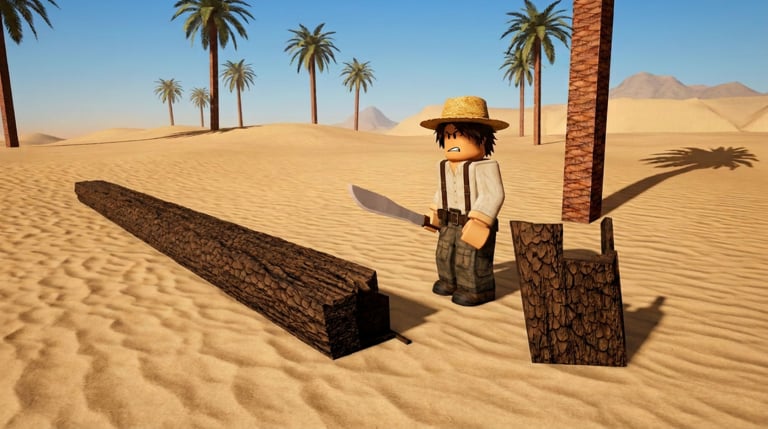
Survive 7 Days In Desert drops you into a Roblox survival sandbox where the fantasy is simple and brutal: you are stranded in a desert, and you must endure until Day 7 when a camel arrives to save you. Christos Studios built a loop that reads clearly in the official description—chop palm trees, build a camp, purify water, survive the heat—but your first hour decides whether that loop feels empowering or punishing. This beginner guide is written for a clean first session: what to do after spawn, which resources matter first, how to avoid early wipe habits, and how to think in days instead of minutes.
If you only remember one sentence, remember this: every early action should either raise your shelter, secure drinkable water, reduce heat risk, or shorten the travel distance between those three needs. Sightseeing the rocky mountains and cactus fields is fine after your camp skeleton exists—not before.
What kind of game this is
This is a multiplayer survival experience with a server cap around 25 players. Visits and favorites show strong interest for a recently shipped title, and the place is still iterating, so treat systems as living. Report broken interactions to the developers rather than assuming a wiki page is wrong forever. There are no verified promo codes required to begin, and you do not need scripts to learn the intended loop. Open the official Roblox place, join a server, and play the fantasy as published.
The environment cues your priorities. Palm trees signal wood. Oasis water signals life that still needs purification. Tents and campfires signal a home base. Heat is the invisible timer layered on top of the seven-day clock. Learn those four signals and the desert becomes readable.
Minute-zero priorities
Orient. After spawn, note landmarks: palm clusters, cactus lines, rocky ridges, and any shimmer that suggests oasis water. Landmarks prevent you from chopping a grove then forgetting the path home.
Secure wood. Move toward palms early. Chopping palm trees is the first official beat of the loop because camp materials and ongoing fuel come from that wood economy. Take what you can carry without committing to a marathon trek while heat rises.
Pick a camp site before you over-gather. Ideal early camps sit near enough to palms and water that round trips stay short, with some natural shade or tent coverage once built. Building too far from both resources creates a death commute.
Stand up shelter and fire. Follow the camp building guide for deeper layout advice. For your first session, a functional tent-and-campfire core beats a sprawling unfinished village.
Find water, then purify. Reaching an oasis is not the finish line. Read How to Purify Water and treat purification as a scheduled chore, not a panic button.
Respect heat immediately. Even on Day 1, heat mismanagement ends runs. Pair outdoor work with shade breaks and sane travel windows using How to Survive Heat.
First-session checklist
Use this as a soft script for your opening play window:
- Landmark scan and mental map of palms versus water.
- First palm harvest sufficient for a starter camp.
- Place tent and campfire in a defensible, low-travel spot.
- Establish an oasis route and complete at least one purification cycle.
- Survive the first major heat spike without abandoning camp progress.
- Stock a small buffer of wood and purified water before exploring ridges for fun.
- Decide whether you are playing solo efficiency or coop roles if teammates are nearby.
If you complete those seven steps, you have converted “stranded” into “surviving.” Everything after that is pacing toward Day 7.
Thinking in seven days from Day 1
Beginners often play as if the desert is an infinite afternoon. It is not. The camel rescue is a Day 7 event, which means Day 1–2 should build capacity, Day 3–5 should stabilize routines, and Day 6–7 should protect the lead you already earned. The day-by-day walkthrough expands that calendar. As a starter mindset:
- Days 1–2: Infrastructure. Wood, camp core, water route, heat habits.
- Days 3–5: Maintenance and modest expansion. Do not burn your buffers on vanity trips.
- Days 6–7: Risk control. Stay liquid on water, stay shaded, stay near camp unless a critical shortage forces a run. Details live in Camel Rescue on Day 7.
Coop etiquette on busy servers
Full or nearly full servers change the beginner experience. Palms near popular spawns may be contested. Oasis approaches can feel crowded. Communicate simple roles when possible: wood cutters, water runners, camp builders. If nobody talks, play as if resources are contested—harvest earlier, store at camp sooner, and avoid leaving unfinished piles in the open. Solo players should accept a smaller footprint and tighter loops rather than racing a 25-player economy alone.
Common first-hour mistakes
Exploring before shelter. Rocky vistas are tempting. They also strand you far from wood and water when heat spikes.
Drinking the fantasy, skipping purification. The game calls out purifying water for a reason. Treat unpurified oasis water as unfinished work.
Giant camp plans on Day 1. Overbuilding drains wood and time. A living tent-and-fire core outperforms a half-built compound.
Ignoring heat until you are already failing. Heat is not a late-game mechanic. Bake good habits into the first session.
Playing without a Day 7 finish line. If you treat each minute as disconnected chores, you will stabilize too late. Always ask whether an action helps you still be alive when the camel can save you.
How this page links the rest of the wiki
After your first successful camp skeleton, deepen systems with Survive Heat and Purify Water. When you want layout quality, open Build Camp. When you want a weekly script, use Day-by-Day. When you are closing a run, study Camel Rescue. For meta pages, check Codes for any future rewards, Updates after patches, and the Guides Hub for the full tutorial map.
Mindset for a work-in-progress survival game
Survive 7 Days In Desert is released enough to play seriously and new enough that details will shift. Prefer durable skills—routing, pacing, buffer management, coop roles—over memorizing a single fragile trick. When something feels broken, document it and report it to the developers instead of inventing unofficial workarounds as gospel. Your first win is not a perfect aesthetic base; your first win is a clean week that ends with the camel rescue because you respected palms, camp, purified water, and heat from minute zero.
Play the next session with this page open beside the Roblox client. Tick the checklist. Then graduate into the specialist guides. The desert rewards players who treat Day 1 as the foundation of Day 7—not as a sightseeing tour with a campfire afterthought.
Frequently Asked Questions
Quick answers to the most common desert survival questions.
What should I do first after spawning in Survive 7 Days In Desert?
Scan for palms and water landmarks, chop wood for a starter camp, place tent and campfire, then set a purification routine before long exploration.
Do I need codes to start playing?
No. Begin with the core survival loop. Check the Codes hub later if promo rewards are published; none are required for a first session.
Is the game solo-friendly for beginners?
Yes if you keep a compact camp and short resource loops. On busier servers, expect contested palms and plan buffers earlier.
When does the camel save you?
The published fantasy is a Day 7 camel rescue. Pace wood, water, heat, and camp so you are still stable when that day arrives.
Why is purifying water called out separately from finding water?
Oasis water is the source, but purification is part of the official survival loop. Treat it as a scheduled step, not an optional flourish.
Where should I go after this beginner guide?
Read Survive Heat and Purify Water next, then Build Camp and the day-by-day walkthrough for weekly pacing.