Survive 7 Days In Desert Survive the Desert Heat
Keep working the palms and oasis without letting heat end your seven-day run.
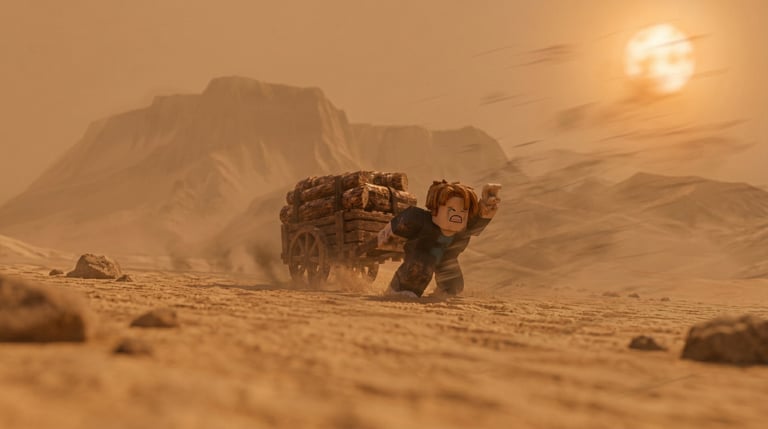
Heat is the quiet killer in Survive 7 Days In Desert. Palm trees, oasis water, tents, and the Day 7 camel rescue get the spotlight in the official loop, but none of those systems matter if you collapse while hauling wood across open sand. This guide explains how to treat heat as a resource budget: when to work, when to shelter, how camp placement reduces exposure, and how to recover without abandoning the week.
Survive 7 Days In Desert is a Roblox survival title from Christos Studios set among rocky desert mountains, cactus fields, palm groves, and oasis water. The environment looks harsh because it is. Your job is not to ignore the sun—it is to schedule around it while still chopping palms, purifying water, and maintaining camp for seven days.
Why heat management is a core skill
The published fantasy lists “survive heat” alongside chopping trees, building camp, and purifying water. That is a design statement. Heat is not flavor text; it is a pressure layer that punishes inefficient routes and reward-chasing without shade. Players who only optimize wood per minute often die with full pockets. Players who only hide in tents forever never stock the buffers that Day 6–7 demand. Balance outdoor labor with recovery.
On servers with up to 25 players, heat also interacts with social density. Contested palms push people into longer trips. Crowded oasis paths create queues and wasted exposure time. Good heat play includes choosing quieter resource nodes when the popular ones force you to stand in the open too long.
Build a heat-aware camp
Your strongest heat tool is geography. Place camp where round trips to palms and water stay short, and where tents plus campfire create a reliable reset point. A beautiful ridge base that doubles every commute will cook you. Prefer a modest site with shade potential and fast access over a scenic overlook. Deepen layout choices in How to Build a Camp, but keep this rule even on Day 1: every extra minute of empty travel is heat tax.
Tents are not only storage and sleeping fantasy—they are a reason to stop moving. When heat climbs, returning to camp should feel like a planned phase, not a panicked retreat. If your camp is too far, you will delay the retreat until it is too late.
Work in cycles, not marathons
Adopt a simple outdoor cycle:
- Leave camp with a clear objective (wood count, water run, or scouting a landmark).
- Execute the objective on the shortest safe path.
- Return before you “just grab one more” beyond your heat comfort.
- Recover in shade or tent coverage.
- Restock and repeat.
This rhythm pairs perfectly with purification chores from How to Purify Water. Water runs are mandatory; making them short and repeated is safer than one heroic trek that strands you far from shelter.
Landmarks and route discipline
Use cactus lines, rocky outcrops, and palm clusters as navigation aids so you never wander while overheated. Getting lost is a heat multiplier. Before you leave camp, name the landmark you will hit and the landmark that means “turn home.” Beginners from the Getting Started guide should practice this on Day 1 even when resources feel abundant.
Avoid climbing every ridge “because it is there.” Elevation can help scouting, but long climbs in open sun often cost more than they teach. Scout once, memorize, then run efficient flats between known nodes.
Shade, tents, and micro-breaks
When the game gives you tent coverage and camp structure, use them as heat valves. Micro-breaks beat heroic endurance. Step into shade between palm chops if a grove offers any relief. Do not treat shade as weakness; treat it as uptime insurance. A player who takes three short breaks often gathers more total wood than a player who face-tanks heat and then spends a long stretch incapacitated or dead.
If teammates are present, stagger roles so someone maintains camp readiness while runners cycle. Shared awareness stops the whole group from overheating on the same vanity expedition.
Heat plus water is a paired system
Heat stress and water stress amplify each other. Purified water supports continued labor; heat mismanagement increases how often you need that support. Never separate the two mentally. Before a hot stretch of outdoor work, confirm you are not already behind on purification. After a heat scare, prioritize water discipline before decorative building. The day-by-day walkthrough shows how this pairing changes across the week: early days teach the habit; late days punish breaking it.
Day-phase thinking without invented clocks
Exact in-game meter math can shift while the experience remains a work in progress. Instead of memorizing unverified numbers, use qualitative phases:
- Fresh phase: Leave camp, do high-value outdoor work.
- Warming phase: Finish the current objective; do not add side quests.
- Danger phase: Path home immediately; cancel optional scouting.
- Recovery phase: Tent/shade, water check, then reassess.
If you cannot identify which phase you are in, you are already playing too greedily.
Coop heat tactics
On populated servers, assign a simple rule: runners call when they enter danger phase so others do not expect them to “finish the pile.” Builders keep camp usable as a recovery hub. If palms near spawn are stripped, relocate the wood route rather than extending a deadly commute. Solo players should shrink ambition—fewer landmarks per loop, earlier returns, smaller construction goals.
Mistakes that look productive
Carrying maximum wood through maximum sun. Heavy successful trips still fail if you never make it home.
Building expansion during peak stress. Construction can wait; your life cannot.
Chasing a contested oasis while already hot. Find a calmer approach or recover first.
Ignoring the seven-day finish line. Heat deaths on Day 2 teach nothing if you repeat them on Day 6. Late-week stability for the camel rescue depends on heat habits you install early.
Practice plan for your next run
- Place or adjust camp for shorter palms-and-water loops.
- Run five intentional cycles with hard return rules.
- Pair each water purification with a heat recovery beat.
- Log whether deaths came from greed, lost navigation, or bad camp distance.
- Fix the top cause before expanding exploration.
Return to the Guides Hub after patches via Updates, because heat presentation may evolve while the desert fantasy stays constant. Master heat and the rest of the loop—wood, camp, purified water, Day 7—becomes achievable instead of theoretical.
Frequently Asked Questions
Quick answers to the most common desert survival questions.
What is the fastest way to reduce heat risk early?
Shorten travel between camp, palms, and water, and run objective-based outdoor cycles with mandatory returns instead of open-ended wandering.
Does camp placement really affect heat?
Yes. A scenic but distant camp forces longer exposure every trip. Prioritize short loops and a reliable tent recovery point.
Should I keep gathering when I feel only a little overheated?
Finish the current objective if you are close, then return. Adding side tasks in the warming phase is how soft danger becomes a wipe.
How does water relate to heat survival?
They amplify each other. Stay ahead on purification so heat spikes do not stack with dehydration pressure during long trips.
Any tips for full servers?
Avoid standing in contested open spots. Relocate to quieter palms if needed, stagger runner roles, and keep camp ready as a recovery hub.