Survive 7 Days In Desert Wood Cart & Long Hauls
Drag serious palm wood across the desert without cooking yourself on the return trip.
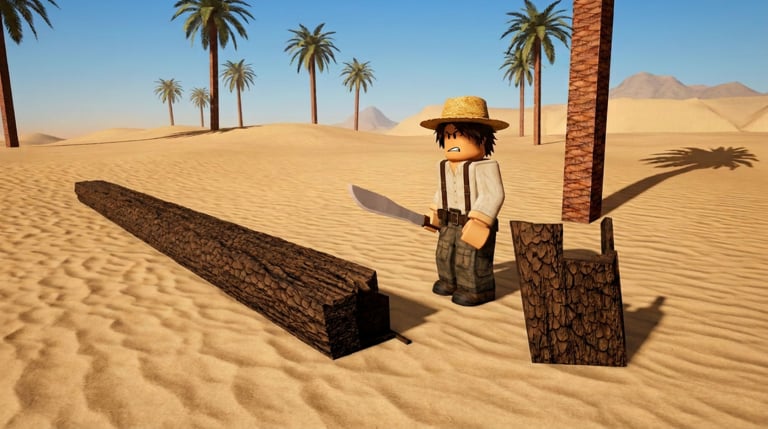
Palm wood is the construction currency of Survive 7 Days In Desert, and the cart is how ambitious lobbies move unreasonable piles without turning every tree into a pocket-sized commute. Christos Studios’ Roblox survival fantasy is blunt: chop palm trees, build camp, purify water, survive heat, and last until the camel returns on Day 7. Cart hauling sits inside that economy. Used well, it funds canopies, huts, and repairs faster than hand-carrying. Used greedily, it becomes a heat death with wheels.
This guide covers efficient palm chopping, cart routing back to camp, and how to chase The Long Haul badge (“Dragged an unreasonable amount of wood across the desert. The cart is fine. You are not.”) without throwing away the week. Cross-link your reading to Build Camp, Build Canopy, and Survive Heat so tonnage never outruns shade and recovery.
What the cart is for
The cart exists to collapse many small wood trips into fewer high-value deliveries. That sounds purely positive until you remember heat and thirst scale with time in the open. A “successful” overloaded haul that strands you between grove and tent is still a failed survival action. Think of the cart as a multiplier on a route you already made safe—not as permission to ignore camp geography.
Badge rarity underlines the difficulty. The Long Haul lands in a tougher band than early shade or purify milestones, with a much smaller award share than Day 1 hut completion. Unreasonable loads are optional prestige layered on top of the real win condition: still being alive for Camel Rescue.
Chop palms like a supply chain
Before you romanticize giant carts, fix chopping discipline:
- Scout a grove you can see from camp landmarks (cactus lines, ridges, tent silhouette).
- Cut a staged pile near a clear outbound path—not scattered trunks that force zigzag collection.
- Load the cart with a planned destination piece list (canopy sticks, hut needs, maintenance buffer).
- Leave before greed adds “just one more tree” past your heat comfort.
- Unload into camp staging so the next builder is not hunting loose wood in the sand.
Players who chop randomly create cart paths that weave through open sun. Players who stage wood create straight, memorable hauls. On servers capped at 25 players, staging also reduces contested scrap fights over single logs near popular palms.
Route design beats raw strength
Draw the haul as a triangle: grove, path, camp core. Ideal routes are short, flat, and shaded at the destination by a canopy or hut recovery. Secondary goals:
- Visibility: you can recognize home while pulling.
- Traffic: you are not stuck behind chaotic player clumps in a choke.
- Abort options: you can ditch a greedy plan and reach shade if heat enters danger phase.
If your camp sits on a cinematic ridge, cart work will punish you every trip. Relocate or accept smaller loads. Getting Started and Build Camp both prioritize commute quality for this reason.
Heat rules for heavy loads
Cart runs inherit every heat rule and then amplify them:
- Start hauls in a fresh phase after tent or canopy recovery.
- Confirm purified water margin before long pulls (Purify Water).
- Treat warming phase as “finish this load or abandon,” not “add side errands.”
- If danger phase hits mid-haul, prioritize life over the pile—The Long Haul is not worth a wipe.
- Recover fully before the next unreasonable attempt.
The badge description jokes that the cart is fine and you are not. Play like that is a warning label. Micro-breaks under canopy shade between chop and pull often yield more total wood than a single heroic face-tank.
How to approach The Long Haul badge
Chase the badge only after basics are online:
- Hut night survival is reliable (Roof Over Your Head territory).
- Canopy shade exists for abort breaks (Shady Business).
- Water purification is habitual (Water You Waiting For).
- You know a short grove-to-camp line by muscle memory.
Then push volume deliberately: stage a large palm stockpile, load an ambitious cart, and complete the desert crossing to camp in one committed run. If server contest or heat spikes interfere, abort and rebuild the attempt later. Badge hunting on Day 6 while dehydrated is how prestige erases camel progress—see the full list on Badges.
Solo players should attempt Long Haul during quieter lobby moments. Co-op lobbies can assign a spotter or shade caller while the hauler focuses on pathing.
Efficiency tips that stack
- Cut for orders, not vibes. Know whether the next delivery funds canopy, hut, or buffer.
- Keep a maintenance reserve at camp so one failed haul does not stall night readiness.
- Unload into labeled zones (even informal piles) so 25-player chaos does not scatter your economy.
- Do not mix dirty-water risk into haul panic. Never “solve” thirst with unpurified river water mid-cart; that warning path is covered under purify guidance and the Tastes Fine badge.
- Retire giant hauls late week. Day 6–7 should conserve, not set personal records.
Co-op cart roles
Useful splits:
- Chop squad stages palm wood at the grove.
- Hauler runs the cart on the agreed route.
- Builder converts deliveries into canopy/hut progress immediately.
- Water tender keeps purification online so haulers are not forced into oasis detours mid-load.
Callouts that help: wood staged, cart out, cart back, need shade, heat — hold. Point argumentative teammates at Early Priorities if people want decorative builds before haul infrastructure exists.
Mistakes that look productive
- Overloading before you own a safe route.
- Building camp far from palms, then blaming the cart.
- Hauling during peak heat because the grove is finally free.
- Leaving wood in the open so other players “help” it disappear.
- Treating The Long Haul as more important than Survived the Desert.
Practice plan
- Time a normal hand-carry loop versus a moderate cart loop on the same grove.
- Place or adjust canopy shade at the camp end of the path.
- Stage wood for one construction order and deliver it cleanly.
- Only then attempt an unreasonable Long Haul push.
- Log failures as routing, heat, contest, or greed—and fix the top cause.
Staying current
The experience is WIP, with September 2026 badge milestones and continued place updates around that window. Cart feel, wood needs, or prompt text may change; short routes and heat-aware loading should not. Watch Updates, keep reading the Guides Hub, and remember the punchline: the cart can survive a bad decision more easily than you can. Haul with intent, unload into a real camp plan, and let unreasonable tonnage be a controlled flex—not the reason the camel never finds you.
Frequently Asked Questions
Quick answers to the most common desert survival questions.
What is The Long Haul badge?
The Long Haul is earned by dragging an unreasonable amount of wood across the desert with the cart. It is a tougher prestige goal than early shade or purify badges.
Should I use the cart on Day 1?
Use modest cart loads once you have a short grove-to-camp route. Save truly unreasonable hauls until shade, water, and hut basics are stable.
How do I chop palms more efficiently for carting?
Stage wood in one clear pile on a flat path to camp instead of scattering trunks. Cut for a construction order, then load and leave before greed extends the heat window.
Why do cart runs still kill players?
Heavy loads increase time in the open. Without canopy breaks, purified water margin, and a short route, tonnage becomes a heat wipe on wheels.
Is The Long Haul required to win the week?
No. The real win condition is surviving to the Day 7 camel rescue. Treat Long Haul as optional prestige after S-tier systems work.